ServicesStorm Damage Repair
Storm Damage Repair in Ponte Vedra Beach
When wind or a tropical storm gets at your roof, we come out, look it over and photograph what we find. We fix what the storm broke, work with your insurance adjuster, and come back after the next hard rain to make sure the repair is holding.
What storm damage repair covers
Storm damage repair means fixing the parts of your roof that wind, rain or flying debris broke loose. On most homes that means lifted or missing shingles, cracked tiles, bent metal panels, torn flashing and ridge caps that peeled off. Some of it is plain from the yard. A lot of it is not.
Coastal wind does its work at the edges. It gets under the shingles at the eaves and rakes, breaks the sealant strip, and the shingle starts to flap. It can look fine from the driveway and still let water in during the next storm. That's why we start with a free inspection and photos, not a price.
Most storm work is a repair. Sometimes, though, the damage covers most of the slopes, or the shingles were already worn thin before the wind showed up. Then roof replacement may be the better use of your money, and we'll tell you that straight. Either way you get a plain answer and the pictures to back it up.
What the work includes
Roof walk and photo record
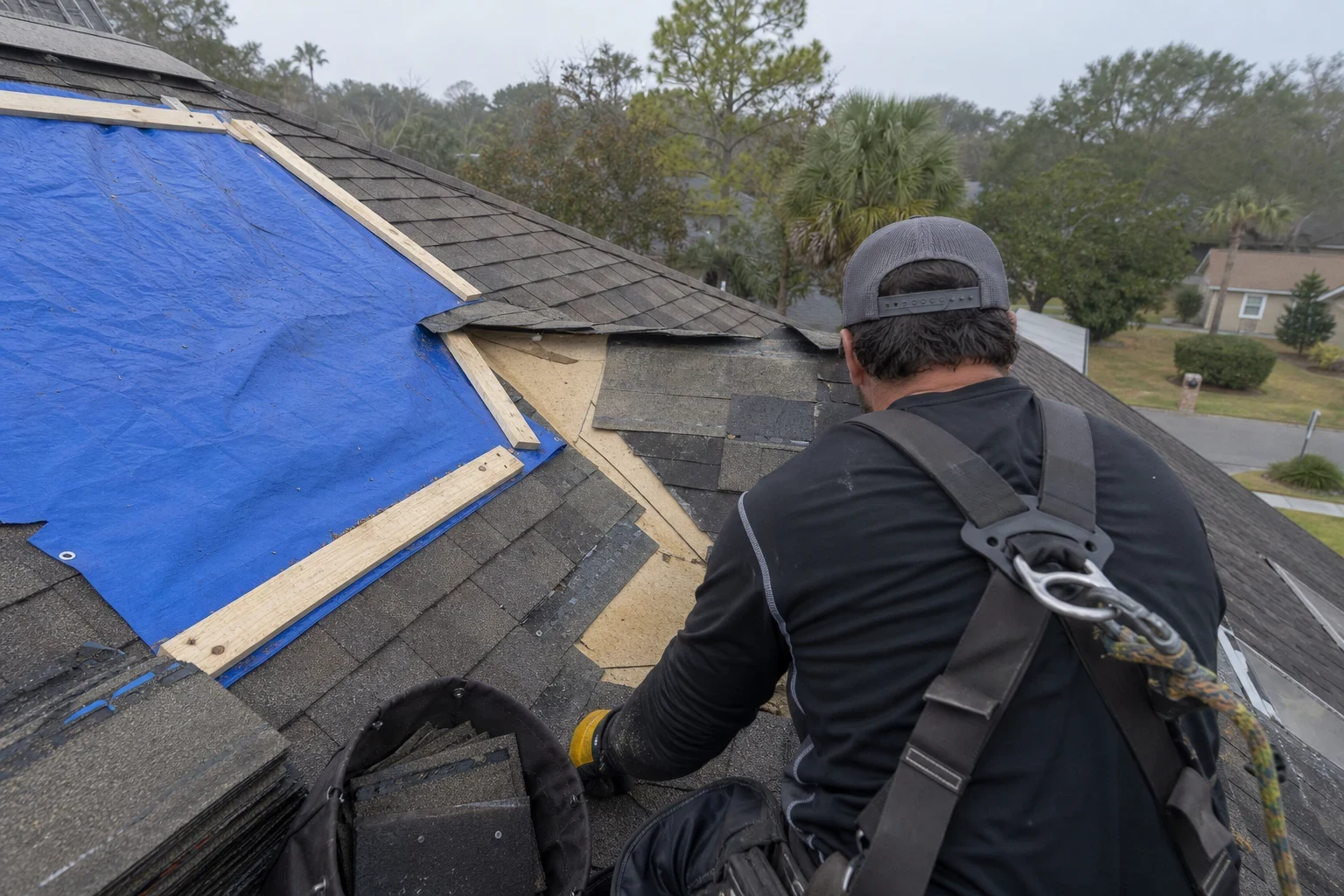
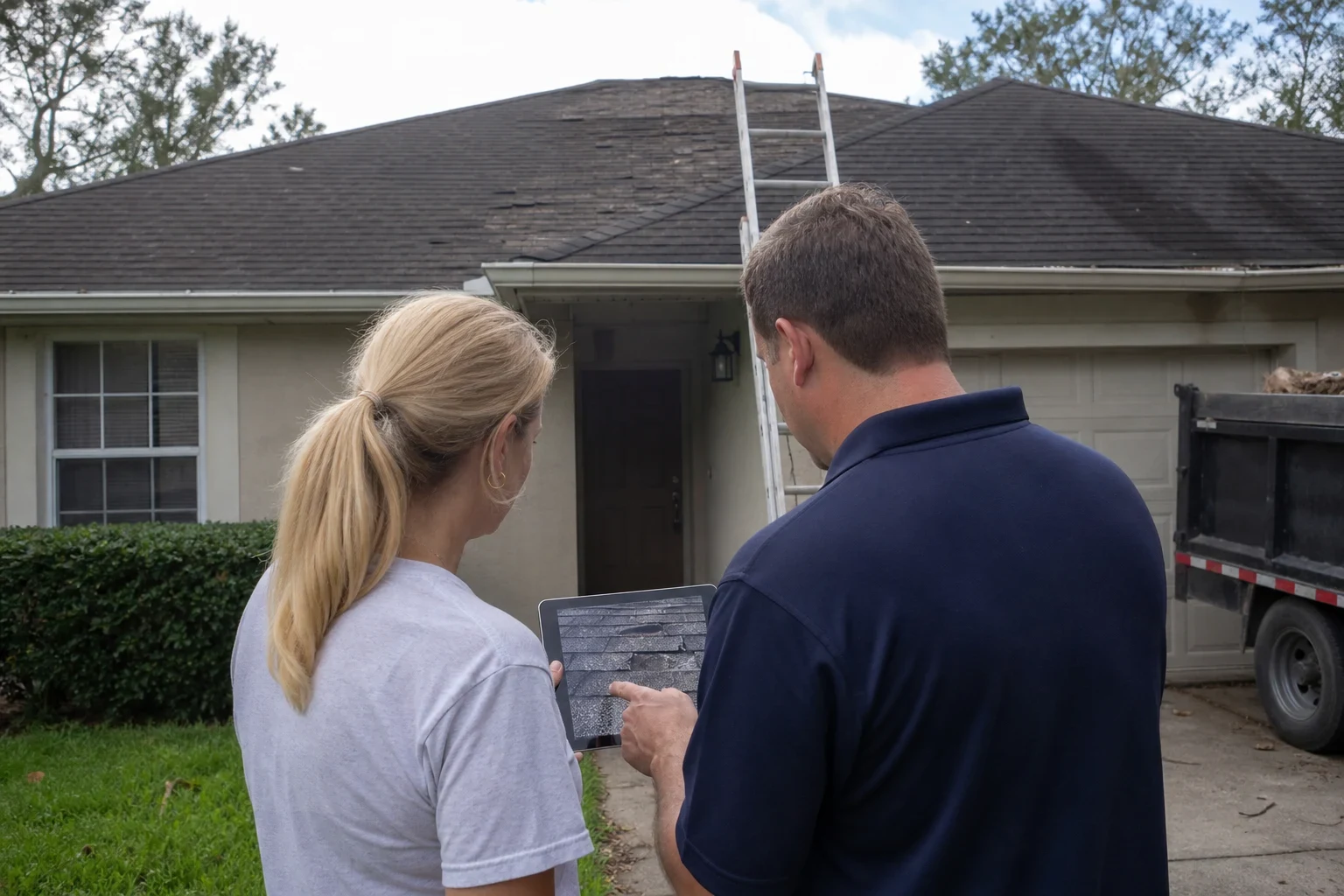
We walk every slope and photograph each damaged spot, one wide shot and one close-up. You keep the photos, and so does your adjuster if you file a claim.
Temporary dry-in
If water is getting in and the full repair has to wait on the claim, we tarp or seal the open area so your home stays dry in the meantime.
Shingle, tile and metal repair
We replace the damaged pieces and match them as closely as the product allows. As a GAF Certified Installer, we know how those shingles should be nailed and sealed so the repair stands up to the next blow.
Flashing, vents and ridge
Storms pull hardest where the roof meets walls, pipes and the peak. We reset or replace flashing, pipe boots, vents and ridge cap, because that's where most storm leaks start.
Decking checked underneath
When shingles come off, we look at the plywood below. Soft or water-stained decking gets replaced before new material goes on.
Gutters and cleanup
Limbs and wind often bend gutters or pull them off the fascia. We note it and can fix it as part of our gutters work. The yard gets cleared of nails and debris before we leave.
Signs the last storm hurt your roof
- Roof pieces in the yard
- Shingle, tile or metal trim on the ground means something came off. Even one piece means there's an opening somewhere.
- Lifted or creased tabs
- Look at the roof edges from the street. Tabs that sit up, ripple or show a crease line were bent back by wind and may no longer be sealed down.
- Fresh water spot overhead
- If a stain turns up on a ceiling once the wind dies down, water got past the roof somewhere. Those spots tend to spread with every rain after.
- Granules at the downspouts
- A heavy pile of sand-like grit at the downspouts after a storm points to shingles that took a beating from wind-driven rain or debris.
- A limb hit the roof
- A falling branch can crack tile, dent metal or punch through shingles. The damage under it is easy to miss until the limb is moved.
How a storm repair job runs
- 1
Free post-storm inspection
We set a time, walk the roof and take photos. Then we go over them with you and point out what's storm damage and what's just age.
- 2
Adjuster meeting and estimate
Claim or no claim, you get a written estimate with each item listed. When a claim is filed, we deal with your insurance adjuster directly and try to be on the roof when they look. We'll walk you through how claims usually go, but coverage is the adjuster's decision.
- 3
Repair day
We're a licensed general contractor and pull the permit when the job needs one. The crew covers shrubs, makes the repair, and runs a magnet across the yard for stray nails before packing up.
- 4
Check-back and care notes
After the first heavy rain, we come back and look at the repair. You also get short care notes: what to watch for after a storm, how to keep gutters running clear, and when it makes sense to have us take another look.
What moves the price of a storm repair
No two storm jobs cost the same. The price depends on how much broke, what your roof is made of, and what we find once the damaged material is off. If there's a claim, we write the estimate so it lines up with what the adjuster sees on the roof. Financing is available if you need it.
- How much is damaged
- A few lifted shingles on one slope is a small job. Damage across several slopes adds labor and material quickly.
- Roof material
- Asphalt shingles are the quickest to patch in. Clay or concrete tile cracks easily underfoot and has to be matched by profile, and metal panels need the right gauge and finish. Some older products aren't made anymore, which can mean a longer search for a match.
- Wet or rotted decking
- Damaged plywood under the storm damage has to be replaced. We can't see it until the top layer is off, so we photograph it and talk with you before adding anything.
- Height, pitch and access
- Steep roofs and second stories need more safety setup and more time.
- Permits and code
- Larger repairs can need a permit and may have to meet the current Florida Building Code, which can add steps to the job.
Storm damage repair questions
- Should I call my insurance company first or a roofer?
- Many homeowners start with an inspection so they know what they'd be filing for. We give you photos and a written list of the damage. Then you decide whether to file. If you do, we work directly with your adjuster.
- My roof looks fine from the ground. Is it worth having it checked?
- Often, yes. Wind damage to shingle seals and flashing is hard to see from the yard, and it may not leak until the next storm pushes rain sideways. The post-storm inspection is free, so it only costs you a little time.
- Will the new shingles match the rest of my roof?
- We match brand, style and color as closely as we can. Sun bleaches shingles, so the new pieces may look a touch darker for the first several months until they weather to the same tone. When a good match can't be found, you'll hear that from us before we start.
- Is the repair covered by a warranty?
- Yes. Our storm repairs carry a 5-year workmanship warranty, which covers how we did the work. We go over what it includes when we hand you the estimate.
- What should I do while I wait for the repair?
- Check ceilings and the attic if you can get up there safely. Put a bucket under any drip and move belongings out of the way. Stay off the roof. If water is coming in, tell us when you call and we'll talk through a temporary dry-in.
Get the roof looked at before the next storm
We'll climb up, take pictures of every damaged spot and go over them with you on the ground. After the repair, we stop back by to see how it handled the next rain.