ServicesRoof Inspections
Roof Inspections in Ponte Vedra Beach That Tell You What to Do Next
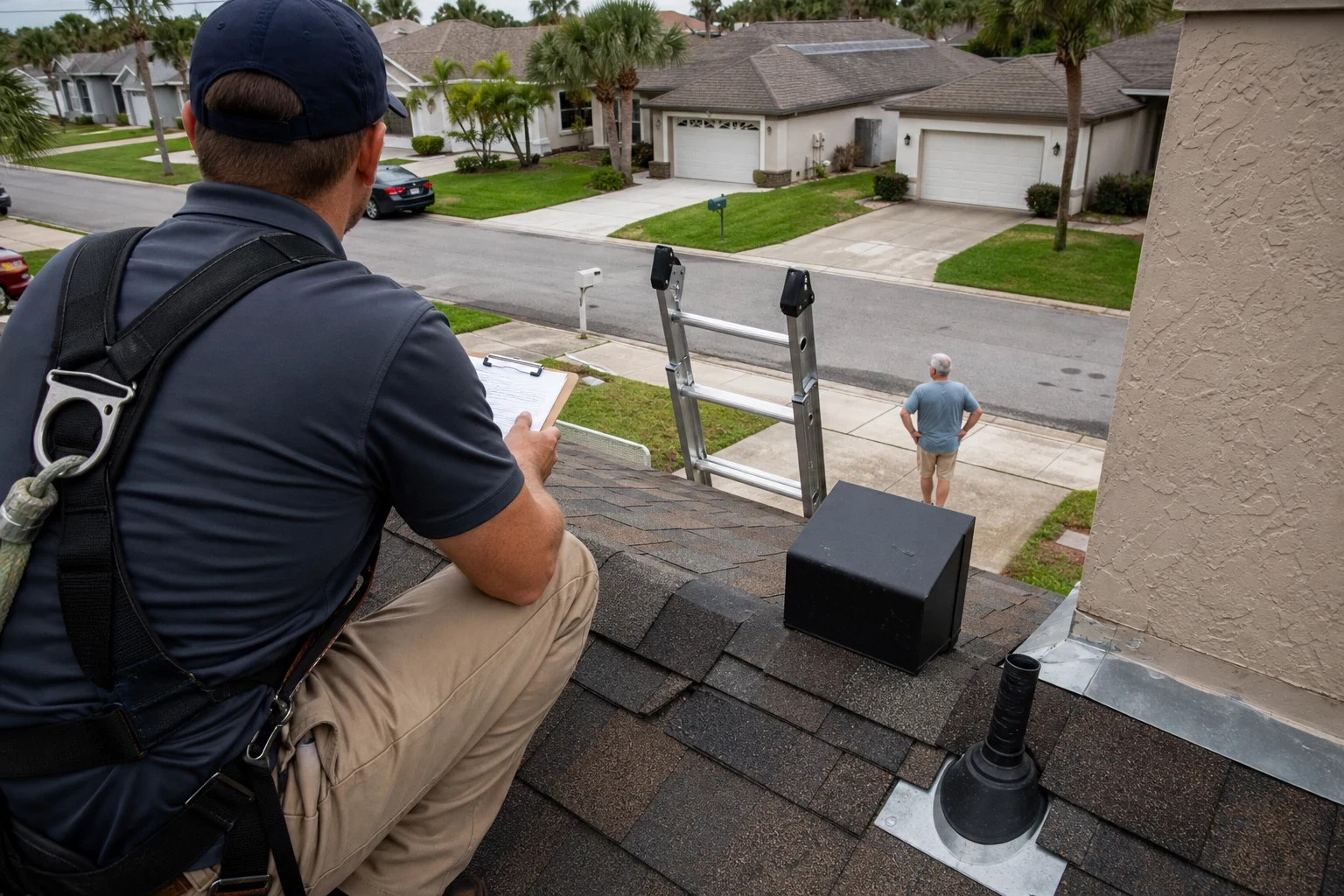
We climb up, look at every part of your roof and tell you in plain words what we found. You get photos, a straight answer on repair or replacement, and notes on caring for it. Then we check back later to see how it is holding up.
What a roof inspection is for
A roof inspection is a close look at your roof by people who repair and replace roofs for a living. We walk the roof where it is safe, check the attic when we can get in, and look hard at the parts that fail first: flashing, vents, valleys, fasteners and the edges.
It is the right call after a big storm, before you buy or sell a home, when a roof is getting up in years, or when you just see something you don't like. Salt air wears on metal parts and sealants faster than most people expect, so a check every year or two catches small things while they are still cheap to fix.
We are a licensed general contractor, so if the inspection turns up work, the same company can do it. Most of the time it turns up nothing urgent. We tell you that too.
What we check on your roof
- Shingles, tile or metal panels
- We look for lifted, cracked or missing shingles, slipped or broken tile, and loose screws or worn washers on metal. We note granule loss and soft spots underfoot. As a GAF Certified Installer, we know how a shingle system is supposed to go together, so shortcuts from past work stand out.
- Flashing and roof penetrations
- Chimneys, wall joints, skylights, plumbing vents and AC lines are where most leaks start. We check the metal and the sealant around each one for rust, gaps and cracking.
- Attic and decking
- From the attic we look for stains, damp insulation, daylight through the boards and signs of poor airflow. A roof can look fine from the yard and still be letting water in.
- Gutter runs and downspouts
- We check that each gutter is held firmly to the fascia, slopes so the water actually reaches a downspout, and isn't packed with leaves. A gutter that spills over keeps the fascia wet, and over time that rots the edge of the roof deck.
- Photos and written findings
- You get pictures of what we found and a short write-up in everyday words. Each item is marked fix now, keep an eye on it, or fine.
Signs it's time to have your roof looked at
A storm just came through
Strong gusts can peel up the edge of a shingle, pop its adhesive strip loose and let it drop back flat. From the driveway it looks normal. A free post-storm inspection tells you if there is real damage before you call your insurer.
Stains on a ceiling or wall
A brown ring on the ceiling means water is getting in somewhere. The wet spot inside is rarely right under the problem up top, so it takes a look on the roof and in the attic.
Shingle grit piling up
A new roof sheds a little loose grit at first, and that's fine. Heavy grit at the downspouts from an older roof tells us the shingles are wearing thin.
Rust streaks or loose metal
Rust on flashing, vent boots or fasteners means the metal is giving out. That can happen well before the rest of the roof is worn out, and it is an easy fix if caught early.
You don't know the roof's history
If you just bought your home or don't know who last worked on the roof, an inspection gives you a starting point. It also helps you plan a budget for the next few years.
What happens on inspection day
- 1
Pick a time by phone
Let us know what caught your eye, if anything, and we book a technician visit for a day that suits you. You never have to climb up yourself. Having someone home to open the attic hatch makes the visit more useful.
- 2
Ground, roof, then attic
We walk around your home first, then climb onto the parts of the roof that are safe to stand on. Tile cracks easily underfoot, so we place our steps with care and work from ladders and edges where we can. A typical visit won't take up your whole day.
- 3
We go over it with you
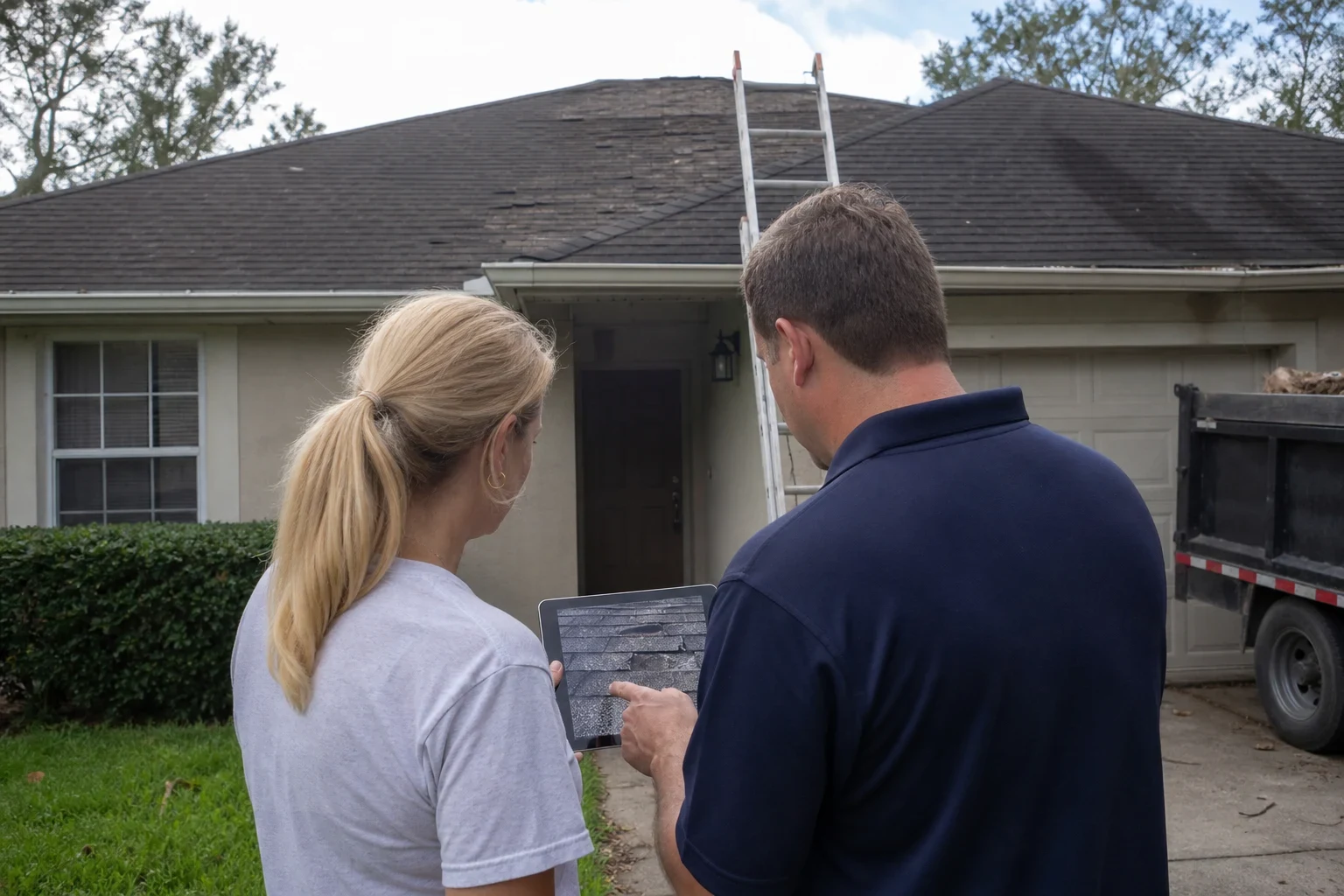
We show you the photos and tell you what we saw. If something needs work, you get a free estimate with each item spelled out. If it can wait, we say so and tell you what to watch for.
- 4
We check back later
A few months on, or after the next big storm, we reach out to see how things look. If we did repairs, that work carries our 5-year workmanship warranty, and we would rather catch a loose spot early than hear about it from a leak.
What sets the cost of work an inspection finds
The inspection is free, and so is the estimate that comes with it. What changes the price is the work itself, if there is any. Financing is available for larger jobs. These are the things that move the number.
- What the roof is made of
- Shingle repairs are usually simpler than tile, where broken pieces have to be matched and the underlayment below checked. Metal work depends on the panel type and how it is fastened.
- Pitch, height and access
- Steep slopes and second-story roofs need harnesses, roof jacks and extra time. Landscaping or a pool close to the walls makes ladder setup slower too.
- What's under the surface
- Wet or soft decking has to be cut out and replaced before anything goes on top. We can't always see how much until the old material comes off, so we tell you that up front.
- Permits and code
- Bigger repairs and replacements need a permit and have to meet the Florida Building Code. We pull it when the job calls for one and plan the work around the inspection.
- Storm damage and insurance
- If a storm caused the damage, your policy may cover part of it. We deal with your adjuster directly on the claim, but your insurer decides what is covered.
Roof inspection questions
Something not covered here? (904) 922-3678
Is the inspection really free?
Yes. The inspection and any estimate that comes from it are free, with no obligation to hire us. We would rather you know what shape your roof is in than guess.
How often should I have my roof inspected?
Once a year is a good habit for most roofs, plus a look after any major storm. Older roofs, or ones that have leaked before, are worth checking more often. Hurricane season runs June through November, so a visit in late spring sets you up well.
Will you try to sell me a new roof?
Not unless your roof needs one. Most inspections end with a few small fixes or nothing at all. When we do recommend roof replacement, we show you the photos and explain why a repair won't hold, and you are welcome to get a second opinion.
Can you help with my insurance claim after a storm?
Yes. We photograph and write up each damaged spot, then talk with your adjuster ourselves so you aren't stuck in the middle. If you like, we'll be on site when the adjuster comes out and point out everything we found. The adjuster and your insurer make the coverage call.
What happens if you find a problem?
You get a free estimate with each repair listed on its own, so you can handle the urgent items now and plan for the rest. Small problems go to our roof repair crew, weather damage to storm damage repair. Either way, we explain how to care for the fix and check back later.
Get a clear read on your roof
One visit gives you pictures, a plain account of your roof's condition and notes on keeping it in good shape. We stay in touch from there, so small problems stay small.